Is a T-Junction House Good or Bad? The Vastu Truth
By Rohit · 2026-07-10 · Home Vastu
The Fear Around T-Junction Homes
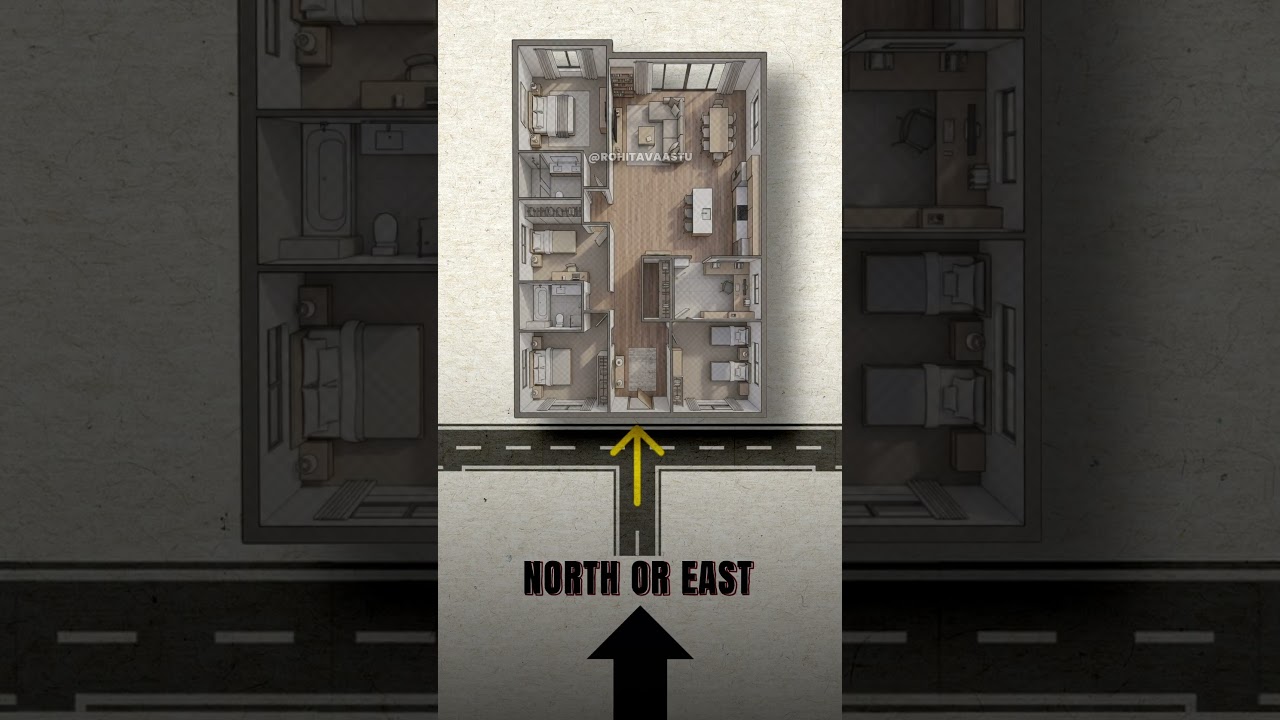
Ask any Indian home-buyer in Australia about T-junction blocks and you'll hear the same word: avoid. Real-estate agents know it too — these blocks sit longer on the market and often sell at a discount. But classical Vastu never said all T-junctions are bad. It said something far more precise.
The road that ends at your property carries a focused stream of energy — Vastu calls it veedhi shoola (road thrust). Whether that stream helps or harms depends entirely on which zone of your plot it strikes.
The Direction Decides
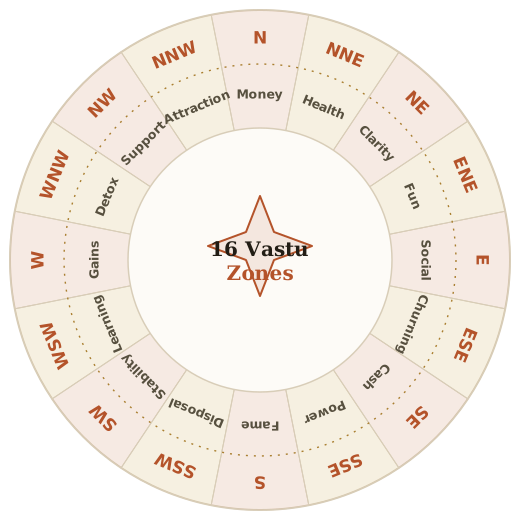
A road thrust striking the north-east of your plot is traditionally considered auspicious — it charges the zone of clarity, health and growth. A thrust into the north or east sectors can likewise support money and social standing.
The troublesome ones are thrusts striking the south-west (stability), south (fame under attack) or the west-south-west — these press on the very zones a family depends on for steadiness. Homes with these thrusts often report restlessness, disputes and a feeling of being 'pushed' by life.
What To Do If You're Buying
Never reject — or accept — a T-junction block from the street view alone. Get the plot plan, mark true north with a compass reading, and identify exactly which of the 16 zones the road strikes. That twenty-minute check has saved our clients from bad purchases and, just as often, revealed discounted blocks that were actually excellent.
Already living in one? Depending on the strike zone, remedies range from gate repositioning and boundary treatment to element corrections at the facing wall — no demolition required in most cases.
Ready to Experience the Advance Vastu Space Healing Method?
Every premises is evaluated with Lecher Antenna, dowsing charts, Vastu axis mapping and zonal analysis — followed by a detailed report with practical, no-demolition remedies.